Prevention and screening
HIV, viral hepatitis, STIs and health education in community settings.
Madrid Positivo · Mobile Screening Unit
A team that reaches out to people, connecting prevention, diagnosis and care.
Health on the move
The Mobile Screening Unit brings prevention, diagnosis and support to settings that conventional healthcare pathways do not always reach.
Testing is the start of a care pathway. We combine information, screening, support and healthcare coordination, adapting the model to different social and cultural contexts.
How we work
Health, outreach and support since 1997
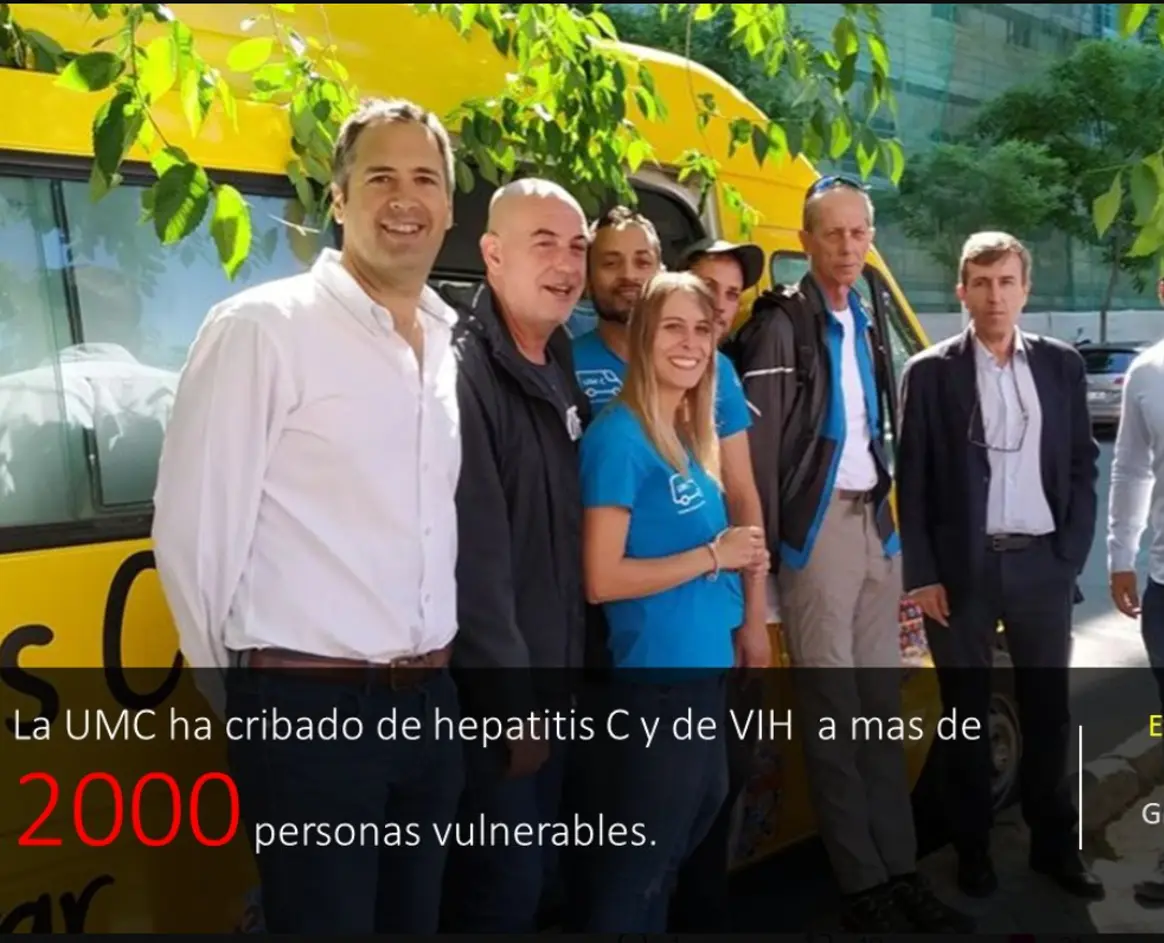
Madrid Positivo is a non-profit association founded within the community in 1997 to address HIV, addiction and social exclusion.
Today, it develops outreach, prevention, harm reduction, early diagnosis and support services. It runs the UMC, contributing community experience, organising fieldwork and providing the mediation team that connects people with healthcare services.
HIV, viral hepatitis, STIs and health education in community settings.
Respectful, non-stigmatising interventions focused on each person's needs.
Referral, support and follow-up to maintain engagement with care.
Applied research, protocols, European projects and team training.


A complete care pathway
Information, prevention, rapid testing and re-engagement of people who have lost contact with care.
Screening for viral hepatitis and, where appropriate, confirmation of active hepatitis C and access to treatment.
Prevention and detection of syphilis and other infections according to the services planned for each intervention.
Health education, harm reduction and responses adapted to different social and cultural contexts.
Appointments, support and coordination with care services to prevent loss to follow-up after diagnosis.
Outreach on the streets and in shelters, day centres, soup kitchens and other community services.
Technology on the streets
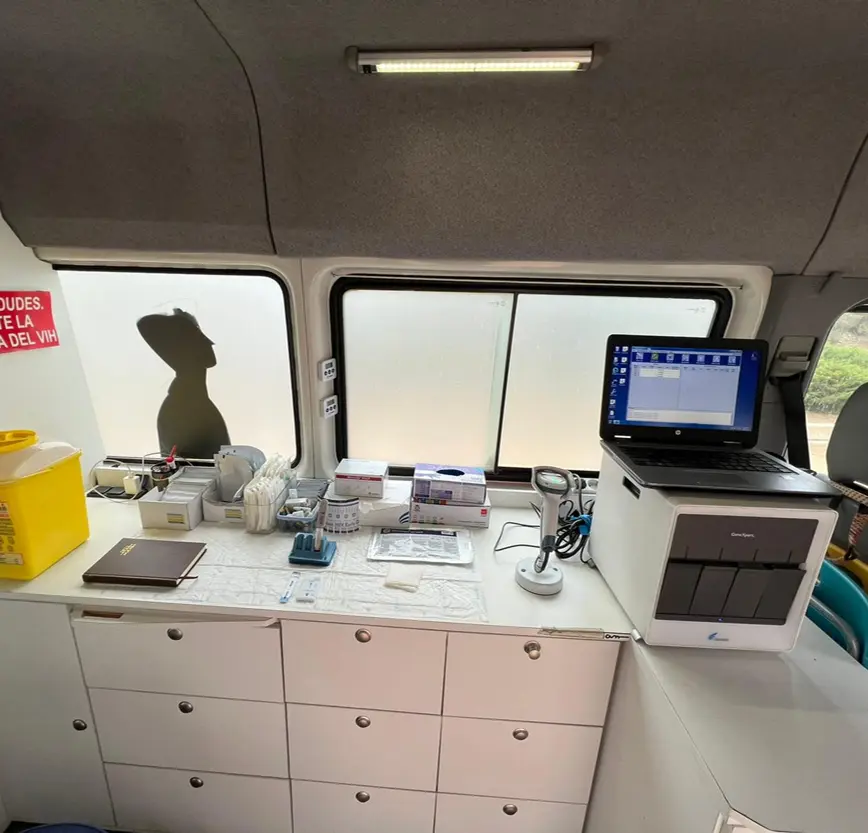
Technology is integrated into a clinical and community care pathway: each test is used according to clinical indications, validated protocols and its availability during the intervention.
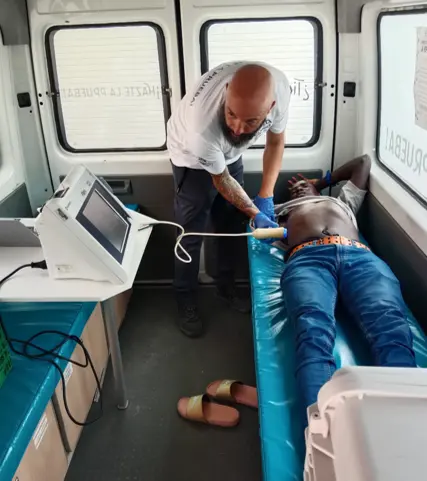
It allows non-invasive assessment of liver fibrosis in people with a reactive rapid test for viral hepatitis or with risks and problems associated with alcohol use, always based on clinical assessment.
Clinical evidence on elastography ↗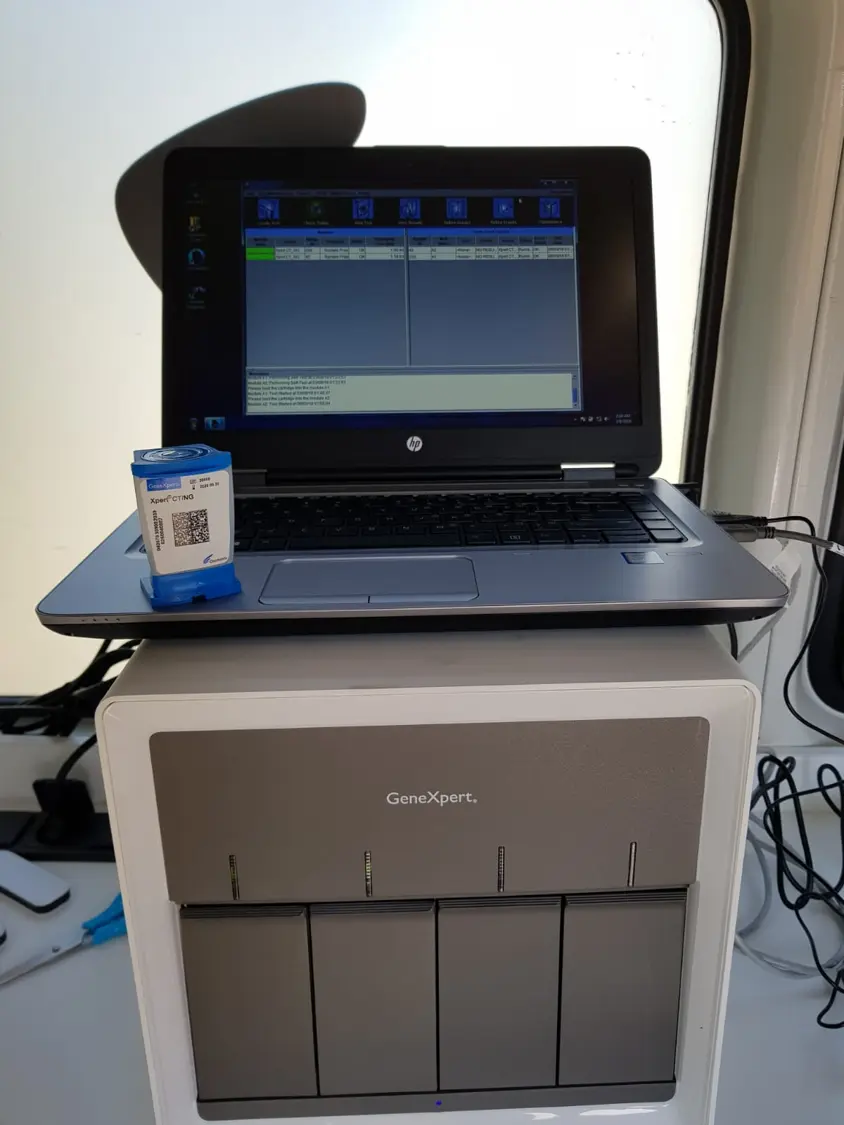
On-site HCV PCR testing allows active infection to be confirmed within the unit, shortening the pathway to care. The platform also has the technical capability to run assays for HIV, HBV and certain STIs; their use depends on the cartridges available, validated protocols and the services planned for each intervention.
How an outreach activity works
We plan each outreach visit with community organisations, social services and healthcare teams.
We provide clear information and adapt the intervention, the language we use and the way people access the service.
We carry out the planned tests using simple, confidential procedures with minimal barriers to access.
We facilitate confirmatory testing, referral, treatment and continuity of care when needed.
“A test matters when it opens the door to care.”
The Mobile Screening Unit model
Discover the unit
This historical video, published in 2019, explains the origins of the model: taking to the streets, offering screening and helping each person access the care they need.
Watch directly on YouTubeA service on the move
Madrid Positivo is founded within the community to address HIV, addiction and exclusion.
The association launches a pioneering HIV prevention and rapid testing programme.
The current service begins operating, providing screening, confirmatory testing and support in more vulnerable settings.
WHO/Europe presents the Madrid model as a good practice for improving access to hepatitis C diagnosis and treatment.
Read on WHO/EuropeFOCUS, MOBHOPE and the new regional service expand capacity for prevention, early diagnosis and innovation.